If you drive a Toyota Highlander in Georgetown, DC, your vehicle is constantly exposed to road conditions that can affect wheel alignment. From potholes and uneven pavement to construction zones and congested city traffic, local driving conditions place ongoing stress on your SUV’s steering and suspension systems. Although the Toyota Highlander has earned a reputation for reliability, comfort, and long-term durability, it is still vulnerable to alignment-related issues that can affect safety, handling, and tire life.
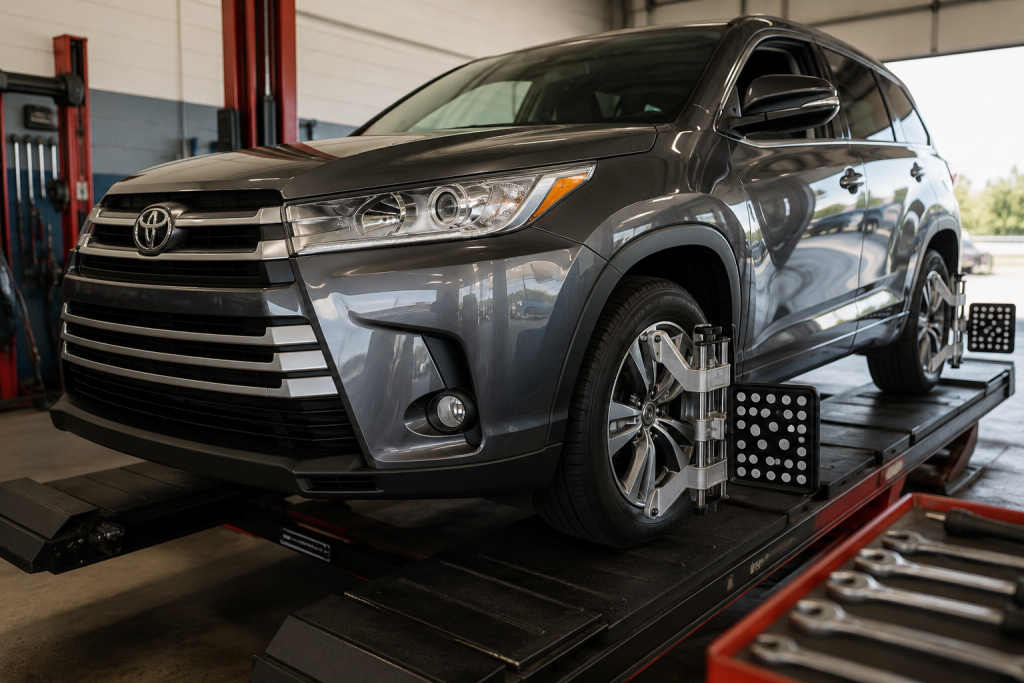
At Tenleytown Automotive, we provide dependable auto repair in Georgetown and help Toyota owners throughout Tenleytown, Cleveland Park, Glover Park, and surrounding Washington neighborhoods identify and correct alignment problems before they lead to more expensive repairs. Our ASE Certified technicians use Hunter Certified alignment technology to accurately diagnose steering and suspension concerns, helping ensure your Highlander continues to perform as Toyota intended.
Whether you have noticed your vehicle drifting to one side, uneven tire wear, or a steering wheel that no longer feels centered, recognizing the warning signs of alignment problems can save you money and help prevent unnecessary wear on critical components.
Why Toyota Highlander Alignment Problems Are Common in Georgetown, DC
Many Toyota Highlander owners are surprised when they learn their vehicle is out of alignment, especially if they have not been involved in an accident or experienced a major impact. In reality, alignment issues often develop gradually through everyday driving.
Georgetown and surrounding Washington neighborhoods present several challenges that contribute to alignment problems. Seasonal potholes, road construction projects, uneven pavement, frequent curb contact while parking, and heavy commuter traffic all place stress on suspension and steering components. Over time, these forces can alter critical alignment angles and affect how the vehicle handles.
Wheel alignment refers to the precise positioning of the wheels and suspension geometry according to manufacturer specifications. Proper alignment ensures that all four wheels work together efficiently and that the vehicle tracks straight down the road. Even small deviations can negatively affect handling, tire wear, fuel economy, and overall driving comfort.
Because the Toyota Highlander is a midsize SUV that carries more weight than many passenger cars, impacts from rough roads can place additional strain on suspension components. This makes routine alignment inspections especially important for drivers who regularly navigate Georgetown streets and surrounding city roads.
Signs Your Toyota Highlander Needs a Wheel Alignment
Alignment problems rarely appear overnight. In many cases, drivers experience subtle symptoms for weeks or even months before realizing there is an issue. Understanding these warning signs can help prevent premature tire replacement and additional suspension repairs.
One of the most common indicators is a vehicle that pulls to the left or right while driving on a straight road. Drivers often compensate for this condition without realizing it by applying constant steering corrections. Because the adjustment becomes second nature, many people do not recognize the problem until it becomes more severe.
Another common symptom is an off-center steering wheel. If the steering wheel appears crooked while the vehicle is traveling straight, it often indicates that alignment angles have shifted out of specification. While this may seem like a minor annoyance, it can signal a larger issue affecting tire wear and handling.
Drivers may also notice that their Highlander feels less stable at higher speeds. If the vehicle wanders within its lane or requires frequent steering corrections, alignment or suspension issues may be affecting overall performance.
Reduced fuel efficiency can also be linked to alignment concerns. When wheels are not properly aligned, rolling resistance increases, forcing the engine to work harder to maintain speed. Although the impact on fuel economy may seem small initially, it can become significant over thousands of miles.
Ignoring these symptoms can lead to accelerated tire wear and increased stress on suspension components. Addressing alignment concerns early is often far less expensive than replacing tires prematurely or repairing damaged suspension parts.
Understanding Toyota Highlander Tire Wear Patterns
Your tires often provide the earliest indication that an alignment issue exists. Careful inspection of tread wear patterns can reveal valuable information about the condition of your vehicle’s steering and suspension systems.
Excessive wear along the inside edge of a tire may indicate excessive negative camber. Because this type of wear develops gradually, many drivers do not notice it until significant tread damage has already occurred.
Wear concentrated along the outside edge of the tire may suggest positive camber issues or other alignment-related concerns. Regardless of the cause, uneven tread wear reduces tire lifespan and can negatively affect handling and traction.
Feathering is another common indicator of alignment problems. This condition occurs when the tread feels smooth in one direction and rough in the opposite direction. Feathering is often associated with toe alignment issues and can create increased road noise as the condition worsens.
Tire cupping typically points to worn suspension components rather than alignment alone. Damaged shocks, struts, or other suspension parts can cause tires to bounce excessively, creating irregular wear patterns across the tread surface. In these situations, correcting the alignment without addressing the underlying suspension problem may only provide temporary results.
If you notice unusual tire wear, it may be time to schedule a professional inspection of your Toyota Highlander suspension system. Identifying and correcting the root cause early can help maximize tire life, improve ride quality, and prevent more costly repairs.
Common Toyota Highlander Alignment Concerns by Generation
Different generations of the Toyota Highlander can experience unique alignment and suspension-related concerns as they age.
Owners of 2008 through 2013 Highlanders often encounter suspension wear associated with aging bushings, ball joints, and control arms. As these components deteriorate, maintaining proper alignment becomes increasingly difficult.
For 2014 through 2019 models, steering sensitivity and uneven tire wear may become more noticeable as mileage accumulates. Vehicles that spend significant time navigating Georgetown streets and city traffic may experience accelerated wear on suspension components.
Newer 2020-present Highlanders frequently feature larger wheel and tire packages that can be more sensitive to road impacts. Even relatively minor encounters with potholes or rough pavement can affect alignment angles and handling characteristics.
Regardless of model year, routine inspections and preventative maintenance remain essential for preserving ride quality, maximizing tire life, and maintaining safe handling characteristics.
Suspension Components That Affect Toyota Highlander Alignment
Many drivers assume that an alignment adjustment alone will resolve handling concerns. However, recurring alignment problems often indicate wear within the suspension system itself.
Tie rod ends play a critical role in connecting the steering system to the wheels. As these components wear, steering precision can decrease and alignment settings may become unstable.
Ball joints allow suspension movement while maintaining proper wheel positioning. Excessive wear can negatively affect handling, tire wear, and alignment accuracy.
Control arms and bushings absorb road impacts while helping maintain suspension geometry. Damaged control arms or deteriorated bushings frequently contribute to alignment concerns and uneven tire wear.
Shocks and struts are equally important. When these components wear out, vehicle stability suffers and tires may experience accelerated wear patterns.
If your alignment issues continue to return despite repeated adjustments, a comprehensive inspection of your suspension system may reveal underlying mechanical problems that require repair before alignment settings can be maintained properly.
How Georgetown Roads Affect Toyota Highlander Alignment
Georgetown drivers face road conditions that can significantly impact wheel alignment throughout the year. Seasonal freeze-thaw cycles contribute to pothole formation, while ongoing infrastructure projects create uneven pavement and construction zones across the area.
A single pothole impact can alter alignment angles, damage suspension components, accelerate tire wear, and affect steering response. Even when damage is not immediately noticeable, the effects can become apparent over time through changes in handling or tire wear patterns.
Construction zones often present additional hazards. Uneven pavement transitions, temporary road surfaces, and unexpected obstacles can place stress on suspension components. Combined with the daily demands of city driving, these conditions create an environment where alignment issues can develop more frequently than many drivers realize.
Parking in urban areas can also contribute to alignment concerns. Accidental curb impacts may seem minor, but repeated contact can gradually affect suspension geometry and steering performance.
Because alignment issues often develop gradually, routine inspections remain one of the most effective ways to identify problems before they become more expensive repairs.
Hunter Certified Wheel Alignment for Toyota Highlanders in Georgetown, DC
Not all wheel alignment services provide the same level of precision. At Tenleytown Automotive, we utilize Hunter Certified alignment equipment to accurately measure critical suspension and steering angles.
Our alignment process evaluates camber, caster, toe, thrust angle, and overall steering geometry. These measurements allow our technicians to identify issues that may not be visible during a basic inspection and ensure adjustments are made according to Toyota specifications.
Modern SUVs such as the Toyota Highlander require precise alignment settings to maintain optimal handling, tire life, and safety. Even small deviations can have a measurable impact on vehicle performance. Hunter alignment technology provides the accuracy necessary to diagnose and correct these concerns effectively.
In many cases, alignment inspections also reveal related issues involving suspension or braking systems. Because these systems work together to maintain vehicle stability and control, addressing all contributing factors is essential for achieving long-term results.
Schedule Your Toyota Highlander Wheel Alignment in Georgetown, DC
If your Toyota Highlander is pulling to one side, experiencing uneven tire wear, or showing signs of suspension-related issues, addressing the problem early can help prevent more extensive repairs and unnecessary tire replacement.
At Tenleytown Automotive, our ASE Certified technicians provide comprehensive diagnostics, Hunter Certified wheel alignments, and professional inspections designed to keep your SUV operating safely and efficiently. We proudly serve drivers throughout Georgetown, Tenleytown, Cleveland Park, Glover Park, Cathedral Heights, and surrounding communities.
If your vehicle may also require suspension repairs, learn more about our Suspension Services. To schedule your appointment, visit our Contact Us page or call (202) 844-2886 today. Our team is ready to help keep your Toyota Highlander performing at its best on the roads of Georgetown, DC.